No products in the cart.
The Maryland Department of Agriculture (MDA) and Maryland’s Best are proud to celebrate 2026: The International Year of the Woman Farmer. We are seeking to honor the resilience, innovation, and leadership of women who are the backbone of our state’s agricultural industry. Nominate yourself or a woman farmer in your life to be featured on our official landing page and social media channels. Each month, one featured farmer will be highlighted state-wide, and her story will be shared with the National Association of State Departments of Agriculture (NASDA) for national recognition. Help us tell the story of Maryland’s hard-working women in ag and seafood!
One of the best ways to support these women farmers is to purchase from them; links are provided to check out their farms!
 Name: Katie Troy, Owner/Operator
Farm: North Acres Farm featuring livestock and poultry
Location: Parkton, Baltimore County
What inspired you to pursue a career in agriculture? I wanted to support my growing family in a meaningful way. I began selling whole and half hogs when my first son was born to help support our family. I quickly expanded to selling retail cuts of pork and beef. When my second was born, I left my full time off farm job to pursue NAF full time. I began raising and selling lamb and chicken cuts and thanksgiving turkeys. What keeps me passionate today is knowing exactly where our food comes from, raising my animals with care, and providing high quality local meats to my surrounding community. All while building a life to be present with my family and being able to watch my farm and kids grow side by side.
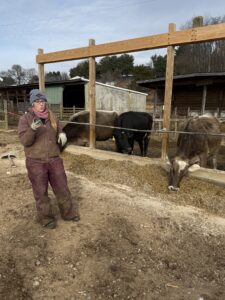
Name: Haley Wilson, Owner/Operator
Farm: Wilson Dairy Farm MD featuring dairy
Location: Freeland, Baltimore County
What is the most rewarding part of your day to day? Spending quality time with the cows and feeling the peace in my head and heart, knowing that I’m succesfully caring for 50 cows and 50 acres.
What is one piece of advice you would give to the next generation of young women entering the agricultural field? Never let someone tell you that you can’t achieve something. If you feel passionately about something, there is no one and nothing who can stand in your way.
 Name: Lisa Lucabaugh, Owner/Operator
Farm: Ripple Creek Farm featuring livestock and poultry
Location: Hampstead, Carroll County
What is the biggest challenge you’ve faced as a woman in farming, and how did you overcome it? When I was building my new barn in 2025, I found a lot of people who wanted to deal with the man of the farm. I am the farmer of the sheep farm. I eventually found builders that worked with me and were very helpful. Many times, suppliers and others in the industry want the male farmer.
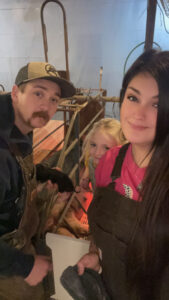 Name: Morgan Mackenzie, Family Partner
Farm: Cedar Creek Livestock featuring livestock & poultry
Location: Union Bridge, Carroll County
What inspired you to pursue a career in agriculture, and what keeps you passionate about it today? Pursuing a career in agriculture came easy with it being my husbands passion. Raising pigs for kids to show all over the United States keeps me passionate. From watching them learn life lessons in raising and caring for the animal to getting to watch the effort they put in at all level of livestock shows makes it all worth while and puts a smile on your face.
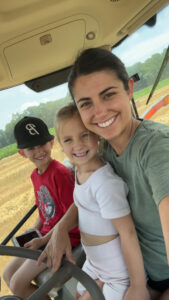 Name: Kelsey Stabler, Family Partner
Farm: Pleasant Valley Farm, featuring Grain, Cattle, and Produce
Location: Brookeville, Montgomery County
What is the biggest challenge you’ve faced as a woman in farming, and how did you overcome it? The household- working responsibilities are my biggest challenge to balance. Often as a woman, you are expected to keep the house, cook, clean, be a taxi driver to children and more all while maintaining a career. But when the career is farming, it’s even more stressful because it’s a 24/7 job as well. It’s important for me to be the best farmer and mom that I can. I am one of two women, and only women, coming on as the next generation of leaders in our farm operation. We have been able to overcome the stressful balance of schedules by sitting down and clearly communicating with all on a weekly basis our time commitments that need to be met in order to be effective on the farm and present as moms.
 Name: Burke Holvey Friend, Agri-Entrepreneur
Farm: Woodlake Tree Farm featuring Christmas Trees and Shop
Location: Oakland, Garrett County
What is one piece of advice you would give to the next generation of young women entering the agricultural field? Diversification is key and keep your mind open.
What is the most rewarding part of your day-to-day life on the farm? Working with the people I love!
 Name: Sarah Campbell, Owner/Operator
Farm: Campbell Sheep & Cattle featuring Livestock
Location: Berlin, Worcester County
What inspired you to pursue a career in agriculture, and what keeps you passionate about it today? I was inspired to pursue a career in agriculture through the stories of both of my grandfathers, who grew up on small family farms. Hearing about their childhoods, their responsibilities, and the values they learned through farm life planted an early appreciation in me for agriculture and the role it plays in shaping character and community. Later in life, I married into an agricultural family, and my husband and I made a deliberate choice to preserve his small family land by keeping it in active production. Together, we turned to raising sheep as a way to build a sustainable working farm while honoring the generations who came before us. Today, what keeps me passionate about agriculture is the lifestyle, the work ethic it instills, and the importance of preserving family traditions. Farming allows us not only to care for the land and our livestock, but also to pass on values of responsibility, stewardship, and perseverance to our children and our community.
 Name: Glenda E Finley (Aya), Owner/Operator
Farm: Lumbri Worms & Garden LLC featuring Composting and Bait Worms
Location: Solomons, Calvert County
What is one piece of advice you would give to the next generation of young women entering the agricultural field? Love what you’re doing and be a lifelong learner.
What is the most rewarding part of your day-to-day life on the farm? The people I meet and the opportunity to exchange information.
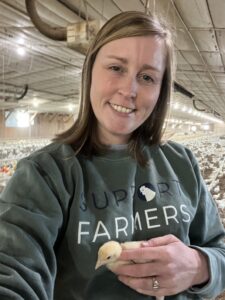 Name: Kristin Hayman, Family Partner
Farm: Makin Memories Farm featuring Grains and Poultry
Location: Greensboro, Caroline County
What inspired you to pursue a career in agriculture, and what keeps you passionate about it today? My kids inspire me to keep growing, and educating consumers & fellow farmers keeps me passionate.
What is the biggest challenge you’ve faced as a woman in farming, and how did you overcome it? Learning the ropes and juggling family and farm life.
 Name: Rachel Ross, Owner/Operator
Farm: Sunkissed Flower Farm featuring Horticulture
Location: Stevensville in Queen Anne’s County
What inspired you to pursue a career in agriculture, and what keeps you passionate about it today? Rachel started her farm to honor her late grandmother whose initials were SK hence the name. Rachel studied horticulture in college and has a true passion for the industry. She uses only eco friendly sustainable farm practices to protect wildlife and the environment. And she does a lot of work for the community as well.
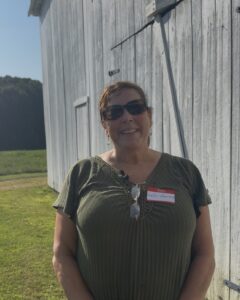 Name: Sheila Hancock, Family Partner
Farm: Hancock Ag, LLC featuring Grains
Location: La Plata, Charles County
What is the most rewarding part of your day-to-day life on the farm? Sheila would definitely say when she is with her grandkids. These days, she supports her 5 children by helping any way she can with their childcare needs. Three of her children have seen success in farming and it’s largely due to her support. We are able to work and know our children are being lovingly taken care of. I, as her daughter in law, would not have been able to pursue becoming a young woman farmer without her support and expertise. She’s inspired me to try new things on the farm, and not be so afraid of failure.
 Name: Dr. Michaele C. Samuel, Owner/Operator
Farm: Tranquil Islands Farm featuring Urban Agriculture
Location: Clinton, Prince George’s County
Are you a first-generation farmer, or are you carrying on a family legacy? I am carrying on a family legacy. I represent a continuation of at least two generations of farming knowledge and practice. I grew up in Grenada, where my mother farmed and where working the land was an integral part of daily life and food security. From an early age, I participated in planting, harvesting, and food preparation, learning firsthand the value of self-sufficiency, stewardship, and respect for the land. While my farming work today takes place in a different context as an urban farmer in Maryland, the principles I carry forward are the same. My work honors those earlier generations by preserving cultural knowledge, cultivating heritage crops, and passing agricultural skills on to others through education and community engagement.
 Name: LaWann Stribling, Owner/Operator
Farm: STRIB Flowers and Herbs Ancestral Farm featuring Urban Agriculture
Location: Bowie in Prince George’s
What inspired you to pursue a career in agriculture, and what keeps you passionate about it today? I was inspired to pursue a career in agriculture through both ancestry and necessity. Long before I had land or formal training, I had a deep pull toward plants, soil, and growing food—something I now understand as ancestral memory. As a child, I dreamed of gardening, baking, and having a farm. As a young mother navigating homelessness, trauma, and mental health challenges, the earth became my refuge. Working with soil quite literally saved my life. I began with flowers, then herbs, then vegetables and fruits—learning that growing food was not just about survival, but about healing, sovereignty, and restoration. Agriculture gave me a way to care for my family when systems failed us, and to reclaim Black farming traditions that were interrupted but never erased. What keeps me passionate today is watching that healing ripple outward. Seeing children grow food and gain confidence, families reconnect with cooking and wellness, and communities remember that we come from growers. Farming reminds me daily that regeneration—of land, people, and legacy—is always possible.
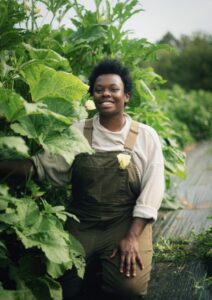 Name: Jarmonay P Nelson, Owner/Operator
Farm: Enjoui Farm featuring Horticulture
Location:Howard County
What is one piece of advice you would give to the next generation of young women entering the agricultural field? Start small and observe, learn deeply, and don’t wait for permission. Skills are power. If you know how to grow food, you will always have a way to care for yourself and your community. Listen or take chances because you never know what can happen, build relationships, and remember that farming is both science and heart.
What is the most rewarding part of your day-to-day life on the farm? The most rewarding moments are simple ones harvesting at sunrise, watching kids pull carrots or holding a watermelon for the first time, or cooking a meal entirely from food we grew. Those moments remind me that this work matters. It’s healing, it’s practical, and it brings people together.
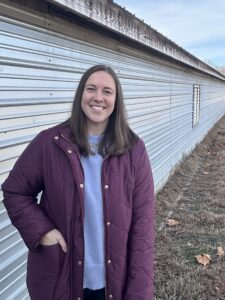 Name: Trish Bucci, Owner/Operator
Farm: Far-Fetched Farm featuring Livestock & Poultry
Location: Sharptown, Wicomico County
What inspired you to pursue a career in agriculture, and what keeps you passionate about it today? I have always had a love of animals. I grew up in suburban Anne Arundel County with no family connections to agriculture. I had a breeding sheep 4-H project at Kinder Farm Park where I took every opportunity to learn more about the agriculture industry. I chose to major in Livestock Science and Management, interned at places like the MDA Animal Health Program, worked for the Maryland Farm Bureau, and purchased my own farm to fulfill a lifelong dream of becoming a full-time farmer. I am so passionate about the agriculture industry because I know that every single person in this industry is not in it for the money, not in it for the accolades, but truly in it for the love of serving their communities and sustaining our state and country with fresh, safe, and affordable food and fiber.
 Name: Tiara “FarmerTee” Matthews, Owner/Operator
Farm: Plantation Park Heights Urban Farm featuring Urban Agriculture
Location: Baltimore City
What is the biggest challenge you’ve faced as a woman in farming, and how did you overcome it? The biggest challenge I’ve faced isn’t the physical labor or the climate; it’s the perception gap. In the traditional agricultural narrative, women—especially women of color in urban spaces—are often categorized as “community gardeners.” There is a soft, almost patronizing assumption that we are just “playing in the dirt” or managing a “neighborhood hobby.” When I walk into a room to discuss 10,000-gallon rainwater harvesting arrays, Internet of Things (IoT) mini weather station, or the legislative reclassification of urban grow areas to “Agriculture Production Zones,” I often encounter a wall of skepticism. People expect a “feel-good” story about a community garden, but they aren’t always prepared for a High-Science CEO who is building critical municipal infrastructure. Being underestimated is a constant hurdle, but it is also my greatest competitive advantage. I didn’t overcome this challenge by asking for permission; I overcame it through Technical Mastery and Data Fidelity. I shifted the conversation from “planting seeds” to “engineering resilience.” By mastering the Digital Heartbeat —from the labs that test our soil to the sensors that track our rainfall, wind direction, temperature and current overall conditions—I made our results undeniable. It’s hard to patronize a farmer when she’s presenting real-time data that proves her “Cleaner Greener Foods” are more nutrient-dense than anything in the commercial supply chain. I focused on the Agrihood Academy. By training a fleet of young women to manage our Gothic high tunnels and modular systems, we created an “Engine of Scale” that can’t be ignored. When people see a team of young women from Park Heights operating a technology driven urban farm with six (6) ongoing IRB Approved Studies onsite, the “hobbyist” label disappears. I stopped trying to fit into the “traditional” black urban farmer mold. I leaned into the “Reality-Based” approach of Agrihood Baltimore. I recognized that my role is as much about Land-Use Strategy and Preventative Medicine as it is about biology. Today, I don’t just farm; I manage a global innovation node. I overcame the challenge by proving that a woman’s place in agriculture isn’t just in the field—it’s in the lab, in the boardroom, and at the helm of the global 410-to-868 corridor. From the streets of Baltimore to the islands of Trinidad & Tobago , we are showing the world that the most dangerous thing you can do is underestimate a woman with a plan, a high tunnel, and a burning desire to lift up women across the globe.
 Name: Gale Livingstone, Owner/Operator
Farm: Deep Roots Farm featuring Produce
Location: Upper Marlboro, Prince George’s County
What is one piece of advice you would give to the next generation of young women entering the agricultural field? Start small, be persistent and patient. Do not be discouraged or afraid to make mistakes each is an opportunity to learn.
What is the most rewarding part of your day-to-day life on the farm? Waking up on this land and giving thanks to those who came before me.
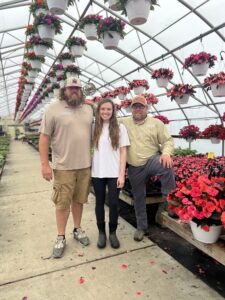 Name: Taylor Rhodes, Family Partner
Farm: Frank’s Produce & Greenhouse featuring Horticulture
Location: Elkridge, Howard County
What inspired you to pursue a career in agriculture, and what keeps you passionate about it today? Taylor grew up watching her grandfather and father in the industry. Taylor received a bachelor degree in Agriculture from the West Virginia University. After graduation she began working for the family business. In 2020 her brother, Chris, cousin Jake Franz and herself became the new owners of the business.
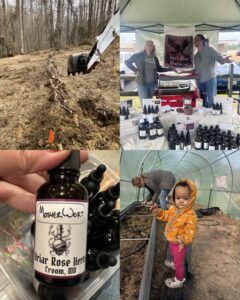 Name: Andrea Crooms, Agri-Entrepreneur
Farm: Briar Rose Herbs/ Meetwe Farm featuring Herbs and Produce
Location: Croom, Prince George’s County
What inspired you to pursue a career in agriculture, and what keeps you passionate about it today? My path to agriculture is deeply rooted in my academic foundation and global perspective. I hold a BS in Resource Economics from the University of Delaware, where I first engaged with the critical systems of food, land, and sustainability. This was powerfully complemented by agricultural studies at the Hassan II Institute in Morocco, an experience that broadened my understanding of resilient farming practices and water management in diverse climates. For over twenty years, I channeled this foundational knowledge into large-scale environmental policy, securing funding and leading programs for climate action and clean energy. Today, I bring that full-circle by operating my own farm. Here, I cultivate herbs, actively exploring the intersections I am most passionate about: herbal medicine, food sovereignty, and social justice. My farm is the practical manifestation of my lifelong study—a space where policy meets the soil, and where growing healing plants becomes a direct act of community care and environmental stewardship.
 Name: Karma Francis (Farmer Karma), Owner/Operator
Farm: Plantation Park Heights Urban Farm featuring Urban Agriculture
Location: Baltimore City
What is one piece of advice you would give to the next generation of young women entering the agricultural field? When I started as a full-time volunteer in 2023, I didn’t choose between being a Marketing Director or a Beginner Farmer—I did both. You don’t have to choose between being “the brains” and “the brawn.” Your ability to communicate the story of the farm is just as vital as your ability to grow the crops. The industry needs women who can navigate a spreadsheet and a social media campaign just as well as they can navigate a greenhouse. Let your work ethic be your voice. Your “feminine” traits—your nurturing spirit, your eye for detail, and your community-mindedness—aren’t weaknesses in farming. They are your greatest competitive advantages.
 Name: Renée Wilson, Owner/Operator
Farm: The Farmyard, LLC featuring Agritourism and Education
Location: Parkton, Baltimore County
What inspired you to pursue a career in agriculture, and what keeps you passionate about it today? I have dedicated my career to building a positive relationship between consumers and farmers. I’m passionate about helping today’s youth become more involved in the industry while enhancing their skills and knowledge. Giving children the same experiences I had growing up as a “farm kid” is the most rewarding part of my job.
 Name: Lindsey Jacobs, Family Partner
Farm: Church View Farm featuring Livestock & Poultry
Location: Millserville, Anne Arundel County
What is one piece of advice you would give to the next generation of young women entering the agricultural field? I tell the kids that we mentor to be a “sponge.” Find someone that has accomplished the goals you have for yourself and learn everything you can from them. Confidence comes from preparation, experience, and a willingness to learn which makes all goals feel attainable in the end.
 Name: Andrea Davis-Cetina, Owner/Operator
Farm: Quarter Acre Farm featuring Horticulture
Location: Greensboro, Caroline County
What is the biggest challenge you’ve faced as a woman in farming, and how did you overcome it? I think as a woman in agriculture you have to deal with the widely accepted stereotype that farmers, farm owners, or owner/ operators are men. It can be frustrating at times when you are selling at a market or going to buy supplies and the person you interact with wants to talk with the “actual farmer”. Even though I have been operating my own farm for 18 years this still happens multiple times each year. To overcome this challenge I lean on my own confidence that I know what I am doing, I have the experience, and I belong. I also take the time to try and educate the public through our website, social media, in-person, and whenever or wherever that farmers come in all shapes, sizes, ages, and genders.
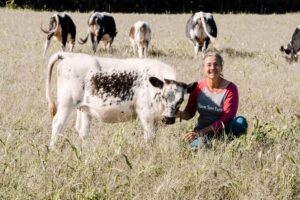 Name: Darlene Goehringer, Owner/Operator
Farm: Pop’s Old Place featuring Livestock & Poultry
Location: Hurlock, Dorchester County
What is the most rewarding part of your day-to-day life on the farm? Knowing I can provide nutrient-dense food for my family and our community. I also love being able to share what I’ve learned with others who want to incorporate agriculture into their lives—whether that’s backyard chickens, gardening, or building a direct-to-consumer farm business like ours.
 Name: Emily O’Hara, Family Partner
Farm: Hara-Vale Farm featuring Livestock & Poultry
Location: Frederick, Frederick County
What inspired you to pursue a career in agriculture, and what keeps you passionate about it today? Emily has been involved with farming from birth – she was a little farmerette and then was the MD State Farm queen and state dairy princess.
What is the most rewarding part of your day-to-day life on the farm? Being able to provide for her daughter and give her the agricultural background is rewarding!
 Name: Eula McDowell, Aspiring Farmer
Farm: Beansville Urban Farm featuring Urban Agriculture
Location: Gwynn Oak, Baltimore County
What is the biggest challenge you’ve faced as a woman in farming, and how did you overcome it? People often imagine that the biggest challenge of small-scale farming is the weather, or the pests, or figuring out what to plant. But the truth? It’s the workforce, and that workforce is mostly just me. Even on a small plot, the work is relentless. There’s no crew to call, no team to delegate to. Every bed that needs turning, every seedling that needs transplanting, every problem that needs solving, it all comes back to one pair of hands and whatever hours I can carve out of an already full life. And then there are the mistakes. So many mistakes. Seeds planted too early. Soil amendments that backfired. Layouts that looked brilliant on paper but failed in practice. There were days I stood in my garden, wondering if I was foolish for thinking I could make this work, days where the research contradicted itself, and the patience I needed felt like more than I had to give. But here’s what I discovered in those hard moments: every mistake was quietly teaching me something that nothing else could. Each failure narrowed the distance between what I didn’t know and what I needed to know. Each do-over sharpened my instincts, made my methods smarter, and deepened my resolve. I’m forever trying something new, and I’ve stopped seeing that as a weakness. It’s my greatest strength. Because while most people quit after the first failed attempt, I kept showing up. I kept researching. I kept experimenting. I kept my hands in the soil when it would have been easier to walk away. The workforce may be small. But what it lacks in numbers, it makes up for in heart, grit, and an absolute refusal to give up. That’s how real knowledge is earned, not from a textbook, but from the dirt under your fingernails and the lessons only failure can teach.
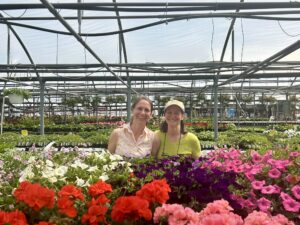 Name: Marilyn Sparks, Family Partner
Farm: White House Nursery featuring Horticulture
Location: Upperco, Baltimore County
What is the most rewarding part of your day? The most rewarding part of my day is seeing things come to fruition – To plant a seed and see it grow, and then see it go from a seedling to either a flower or a fruit and to see how we kept it going through that process.
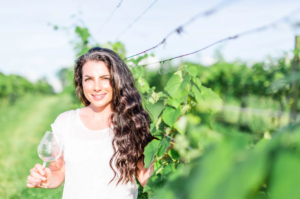 Name: Rachel Loew Lipman, Family Partner
Farm: Loew Vineyards featuring Agritourism
Location: Mt. Airy, Frederick County
What is the biggest challenge you’ve faced as a woman in farming, and how did you overcome it? When I first started to make wine professionally, people would say “she’s so passionate” instead of talented or skilled. Most men I knew weren’t called passionate about wine or winemaking. As soon as our winery got a few awards for our wines, there was a shift from “passionate” to “talented.” Hard work helped me surpass that perception from others.
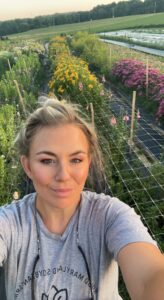 Name: Amanda Hielman, Family Partner
Farm: Chesapeake Gold Farms featuring Dairy and Cut Flowers
Location: Cecil County
What inspired you to pursue a career in agriculture, and what keeps you passionate about it today? I loved it ever since I was little and had a garden… then I got involved with 4-H and horses and wanted to go even deeper. It wasn’t until college at UMD that I found my passion in agronomy and dairy science and I’ve just gone deeper every year.
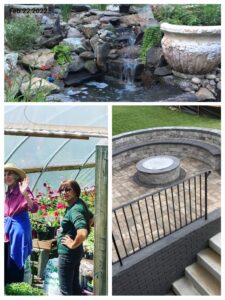 Name: Georgeann Hall, Owner/Operator
Farm: Grasshopper Perennials featuring Horticulture
Location: Pleasant Valley, Washington County
What is one piece of advice you would give to the next generation of young women entering the agricultural field? Keep pushing for what you want and stay strong both physically and mentally.
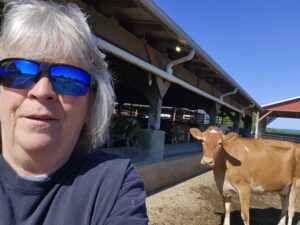 Name: Pamela Moser, Owner/Operator
Farm: Moo Cow Creamery @Walnut Ridge Farm
Location: Middletown, Frederick County
What is the biggest challenge you’ve faced as a woman in farming, and how did you overcome it? My biggest challenge has been being a female in a mans world. Dedication, perseverance and being strong and determined helped to overcome this and earn respect.
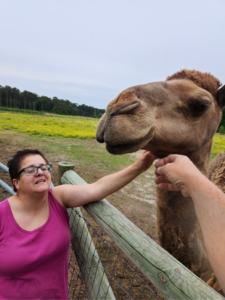 Name: Tina Marie Butler, Owner/Operator
Location: Marion Station, Somerset County
What inspired you to pursue a career in agriculture, and what keeps you passionate about it today?